The process
Everything happens in front of you at the shop
A gold purchase is two measurements: how pure the metal is and how much of it there is. We do both where you can see them, explain each reading, and never take your jewellery out of your sight.
“Very knowledgeable about gold products and provide great service”
The visit, step by step
- 01
Unpack and inspect
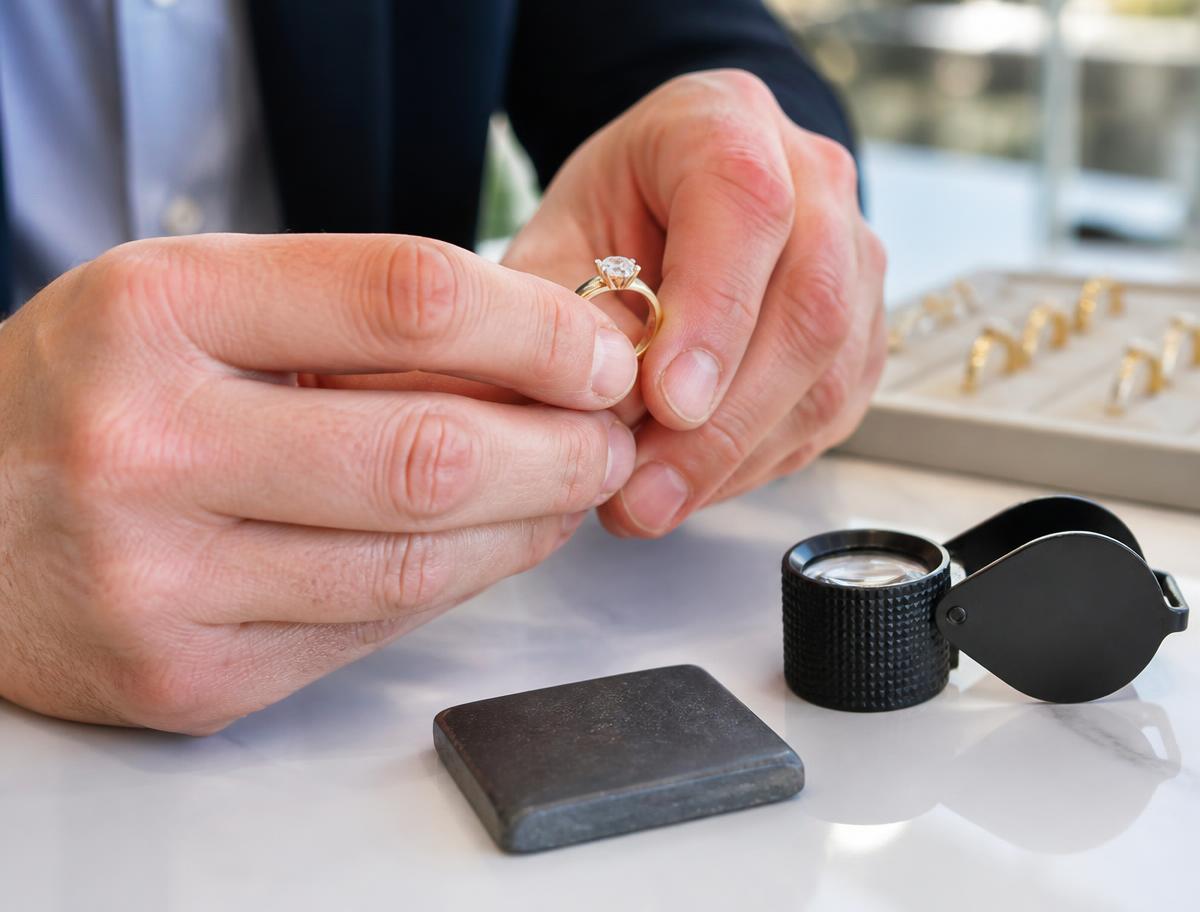
You set your items on the desk and mention anything you think may be special. We examine each piece under a loupe for karat stamps, fineness marks and maker's marks.
- 02
Test, sort and weigh
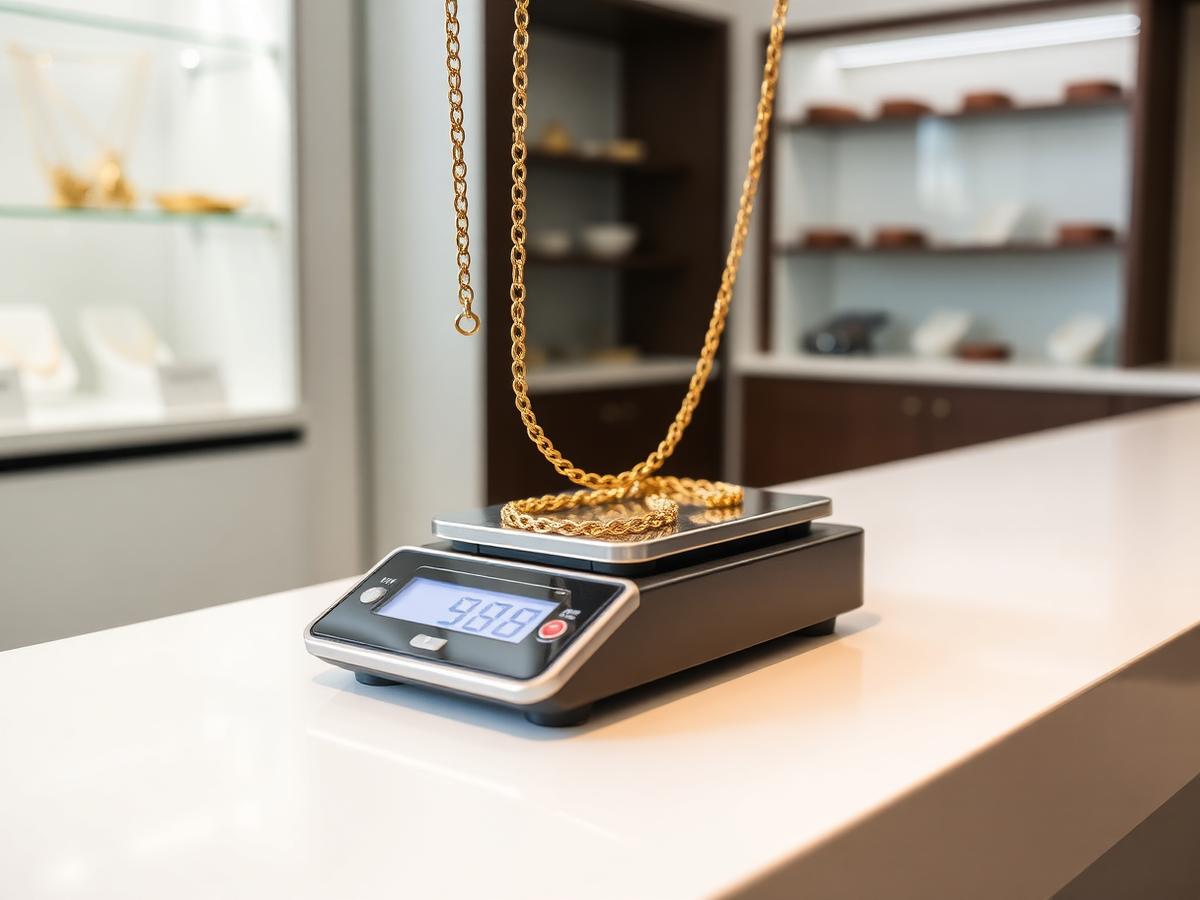
Each piece is acid tested to confirm karat, grouped with other pieces of the same karat, then weighed on a calibrated scale you can read.
- 03
Figure, decision, cash
You get a clear number with any deductions named. If you accept, your ID is recorded as Ontario rules require and you are paid in cash immediately.
How we test karat
A piece is rubbed on a black testing stone to leave a small streak of metal, then graded acid solutions are applied to that streak. A 14k acid dissolves a 10k streak but leaves a 14k streak intact; an 18k acid dissolves the 14k streak, and so on. The point at which the streak survives identifies the karat.
The mark left behind is so small it disappears with cleaning. On heavier items we test at more than one point, because clasps and findings are sometimes a different karat than the body of the piece.
Stamps alone are never the final word. They wear away over decades, older and handmade pieces were often never stamped, and stamps are occasionally inaccurate. The physical test is what we work from.
How we weigh
Karat sorting comes first
Grams, shown to you
Deductions are named
What you need to bring
Valid government photo ID
Your gold — all of it
Why we do not publish rates
Every online quote and posted rate makes the same assumption: that your gold is a particular purity and a particular weight. Neither can be established from a photograph, a phone description or a stamp read at a distance.
Publishing a rate would let us advertise a number and then adjust it downward at the shop through karat assumptions and unexplained deductions. We would rather quote once, in person, after the metal has actually been measured — and let you watch the measurement happen.
The evaluation is free whether you sell or not, and no offer we make expires. Read our full guide to testing and weighing.
Bring your gold in for a free evaluation
No appointment, no obligation, and no charge. We test and weigh everything in front of you at the shop, then pay cash the same visit.
Mon–Fri 12pm–7pm · Sat 12pm–5pm · Sun closed